
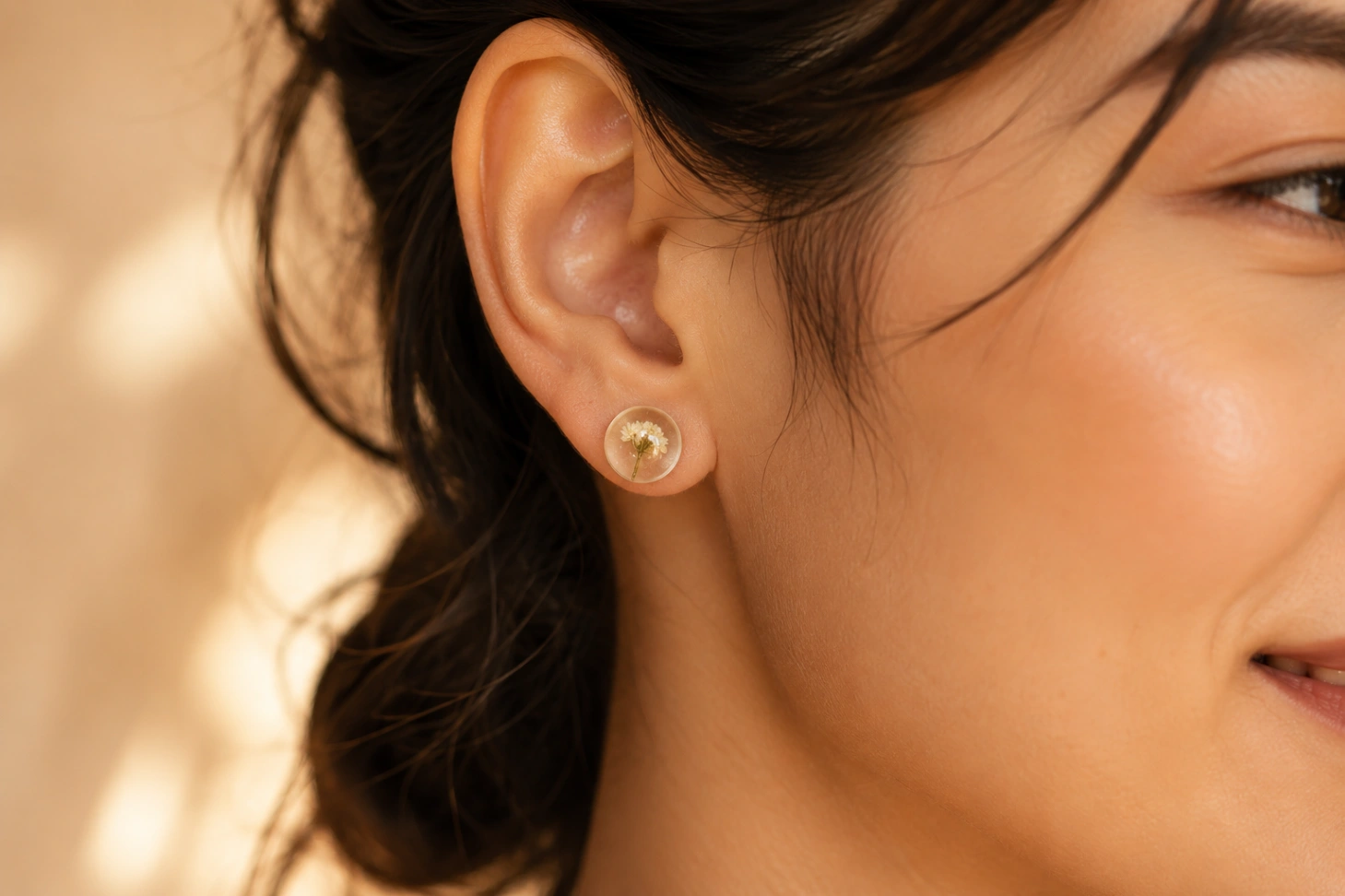
You've seen them on Instagram, spotted them at craft fairs, maybe even received a pair as a gift. Resin earrings with real flowers are everywhere right now — and for good reason. They're beautiful, lightweight, deeply personal, and unlike anything you'll find at a mass-market jewellery store.
But if you're new to this world, it's natural to have questions. Are they durable? Will the flowers fade? How do they make them? And most importantly — where do you find a quality pair that won't disappoint?
This guide answers all of that. Whether you're buying for yourself, gifting for an occasion, or just curious about what goes into these tiny botanical wonders, read on.
What Are Resin Earrings with Real Flowers?
Resin earrings with real flowers are exactly what they sound like — jewellery pieces made by encapsulating actual, real flowers inside clear resin. The flowers are first dried and preserved (either by pressing or using silica gel), then carefully arranged inside a silicone mould. Liquid resin is poured over them, allowed to cure, and then polished to a glass-like finish.
The result is a miniature, wearable piece of nature. The flower is permanently suspended inside the resin — sealed from air, moisture, and time. It won't wilt. It won't decompose. It simply stays, perfectly preserved, for years.
What makes them so compelling is the combination of natural imperfection and careful craft. No two flowers are identical, which means no two earrings are identical either. Your pair is genuinely one-of-a-kind.
What Flowers Are Used?
Almost any flower that can be dried and pressed can be used in resin earrings. At Sabhya Kala, the most commonly used flowers include:
- Roses — The classic choice. Dried rose petals retain rich reds, pinks, and corals exceptionally well.
- Daisies — White petals with yellow centres create a clean, cheerful look. Very popular for everyday pairs.
- Forget-me-nots — Tiny blue flowers that look magical suspended in clear resin.
- Baby's breath — Delicate white clusters that create an ethereal, cloud-like effect.
- Lavender — Adds both a soft purple colour and a subtle botanical texture.
- Marigolds — Vibrant oranges and yellows, particularly popular for festive season earrings.
- Statice — A wildflower that holds colour beautifully and works well in pressed designs.
- Ferns & leaves — Used alongside flowers to add greenery and structural contrast.
Seasonal availability affects which flowers are used at any given time, which means limited-edition releases often feature blooms that aren't available year-round. That's part of what makes botanical resin earrings feel special.
Ready to find your perfect pair?
Sabhya Kala handcrafts resin earrings with real preserved flowers — studs, chandbalis, drops, hoops & jhumkas. Starting at just ₹100. Free shipping on orders above ₹999.
Shop Resin Earrings →How Are They Made? The Process Behind the Beauty
Understanding how resin earrings with real flowers are made helps you appreciate what goes into each pair — and helps you identify quality when you see it. The process is more involved than most people realise.
Step 1: Sourcing & Selecting the Flowers
It starts in a garden. Fresh flowers are sourced at peak bloom — the point where colour is most vibrant and the petals are at their most structurally sound. At Sabhya Kala, flowers come from local gardens and trusted growers across North India, with selection happening by hand. Bruised petals, asymmetrical blooms, or flowers past their peak are set aside.
Step 2: Drying & Preservation
Fresh flowers can't go directly into resin — they contain moisture, and moisture trapped inside resin causes clouding, browning, and eventual decay. So every flower must be thoroughly dried first.
There are two main methods. Traditional flat pressing (placing flowers between layers of absorbent paper under weight) takes 2-4 weeks but results in beautifully flat petals perfect for delicate earring designs. Silica gel drying (burying flowers in silica crystals) preserves the three-dimensional form of the bloom, resulting in a more sculptural look. Quality makers use the right technique for each flower type.
Step 3: Hand-Arrangement in Moulds
With dried flowers ready, artisans arrange them inside silicone moulds using fine tweezers, often working under a magnifying lens. This stage is where real skill shows. The angle of each petal, the placement of smaller accent flowers, the use of negative space — all of it matters. For earring pairs, two separate moulds are filled with flowers matched as closely as possible while still celebrating the natural uniqueness of each bloom.
Step 4: Resin Pouring & Curing
Premium UV-resistant epoxy resin is mixed and poured in thin layers. Pouring in layers — rather than all at once — prevents bubbles, allows precise control over flower placement, and ensures even curing throughout. Between layers, the resin must cure fully (typically 8-12 hours per layer), making the process genuinely slow and deliberate.
Step 5: Demoulding, Sanding & Polishing
After full cure, pieces are carefully removed from moulds, then hand-sanded through multiple grits of sandpaper — from coarse to ultra-fine — until perfectly smooth. A final polishing step brings the glass-like clarity that makes botanical resin earrings so distinctive. Findings (the posts, hooks, or clips) are attached using industrial-grade adhesive.
How Long Do Resin Earrings with Real Flowers Last?
This is the question everyone asks, and the honest answer is: a very long time — if you buy quality and care for them properly.
The flowers inside properly cured, UV-resistant resin are isolated from air and moisture. They won't decay. The colour may shift very gradually over many years with heavy UV exposure, but quality UV-resistant resin dramatically slows this process.
The typical lifespan of well-made resin earrings:
- Resin clarity: 5-10+ years with proper care. Premium UV-resistant resin maintains crystal clarity far longer than cheap resin, which yellows within months.
- Flower colour: 3-7 years before any noticeable fading, and even longer if stored away from direct sunlight. Deep reds and oranges tend to hold better than light pastels.
- Structural integrity: Indefinitely, as long as earrings aren't dropped on hard surfaces. Resin is durable but not indestructible.
The biggest enemy of resin earrings isn't time — it's cheap materials and poor craftsmanship at the production stage. Resin that wasn't properly mixed, flowers that weren't fully dried, or inadequate polishing all reduce longevity significantly. This is why buying from a trusted maker matters.
For detailed care advice, see our Earrings Care Guide: How to Make Them Last for Years.
Looking for a thoughtful gift?
Resin earrings with real flowers make unforgettable gifts — for birthdays, Rakhi, Diwali, bridesmaids, or anyone who loves nature. Browse our gifting collection.
Explore Gifting Collection →Are Resin Earrings Safe for Sensitive Ears?
Yes — with an important caveat. The resin itself, once fully cured, is chemically inert. It won't cause allergic reactions. The concern for sensitive ears is almost always the findings (the metal posts, hooks, or clips) rather than the resin.
Cheap earrings use nickel or mixed-metal alloys that cause the classic "my ears itch when I wear earrings" reaction. Quality makers use:
- Surgical-grade stainless steel: Hypoallergenic, durable, and rust-resistant. The standard choice for sensitive ears.
- Sterling silver (92.5% silver): Elegant and skin-friendly. Tarnishes over time but never causes nickel reactions.
- Titanium: The gold standard for extreme metal sensitivity. Available on request from quality makers.
At Sabhya Kala, all findings are nickel-free and use surgical-grade stainless steel or sterling silver posts. Titanium posts are available on request for customers with extreme sensitivity.
One additional note: if you have very new piercings (less than 6 months healed), consult your piercer before wearing any earrings. Fully healed piercings can generally wear resin earrings with quality metal findings without issue.
Styles of Resin Earrings with Real Flowers
Botanical resin earrings come in a wider range of styles than many people realise. Here's a breakdown of the main styles and who they suit best.
Studs
The most versatile style. Small, flat, and perfect for daily wear — studs featuring a single preserved flower or petal in a dome of clear resin are popular for office wear, college, and everyday outings. They're light enough to forget you're wearing them. Available in round, oval, square, and teardrop shapes.
Drop Earrings
A preserved bloom or arrangement suspended inside a resin drop, dangling from a chain or metalwork finding. Elegant and attention-grabbing without being loud. Perfect for date nights, parties, and indo-western outfits.
Chandbalis
Traditional crescent-shaped earrings redesigned with real botanicals. The resin section features pressed petals or small blooms within the crescent or its hanging drop. Stunning with ethnic wear — sarees, anarkalis, lehengas. Very popular for wedding season and festive occasions.
Jhumkas
The quintessential Indian earring, elevated with real flowers. A resin dome filled with preserved blooms forms the bell, paired with oxidized silver or gold-plated caps. Despite their generous look, quality resin jhumkas weigh under 8 grams — far lighter than traditional metal jhumkas.
Hoops
Classic hoops with a botanical twist — flowers set into the hoop itself or as pendant charms within the circle. A balance between classic and unique. Works with both western and ethnic outfits.
Ear Cuffs
No piercing needed. Tiny resin cabochons with single pressed flowers, mounted on adjustable wire that sits on the ear cartilage. Popular for teens, festival wear, and those who want botanical jewellery without commitment.
1,200+ happy customers across India
Sabhya Kala ships handcrafted botanical earrings across India. Every piece comes gift-ready. Free shipping above ₹999. WhatsApp us for custom orders or bulk gifting.
Browse All Earring Styles →How to Choose the Right Pair for Your Occasion
Botanical resin earrings aren't one-size-fits-all. The right pair depends on where you're going, what you're wearing, and who you're buying for. Here's how to think about it.
For Daily Wear & Office
Choose small studs or mini hoops with neutral flower colours — white daisies, soft lavender, baby's breath. These complement professional settings without demanding attention. The lightweight nature of resin (2-5 grams per earring) means you can wear them all day without discomfort.
For Weddings & Festive Occasions
Go bigger and bolder. Chandbalis, jhumkas, or statement drops in rich, saturated flower colours — deep reds, golden marigolds, vibrant purples — pair beautifully with ethnic wear. Resin botanical earrings are a genuine conversation starter at weddings and will draw compliments all evening.
For Casual Outings & Weekend Wear
Medium hoops, playful drops, or ear cuffs with bright wildflower mixes — daisies, forget-me-nots, mixed botanicals. Fun, colourful, relaxed. Perfect with jeans-and-kurti combos or summer dresses.
For Gifting
Botanical resin earrings make genuinely memorable gifts because they're so clearly not mass-produced. For birthdays, choose the recipient's favourite flower colour if you know it, or go for versatile whites and pastels that suit everyone. For Rakhi or Diwali, festive colours — marigold, rose, crimson — feel appropriately celebratory. For bridesmaids, matching studs in a soft colour make beautiful, cohesive gifts that the whole group can wear on the wedding day and beyond.
For more gifting ideas, explore our guide to Best Resin Earrings for Gifting: A Guide by Occasion.
What to Look for When Buying Resin Earrings with Real Flowers
Not all botanical resin earrings are made equal. Here's what separates a quality piece from a disappointing one.
Real Flowers, Not Prints
Some sellers use printed flower images, stickers, or artificial flowers inside resin. These look similar in product photos but feel cheap in person and don't carry the same meaning. Real preserved flowers have natural texture, subtle colour variation, and a genuine presence. Ask the seller directly if you're unsure, or look for macro photos that show the actual petal texture.
UV-Resistant Resin
The single most important quality differentiator. Cheap resin yellows within months, turning the entire earring amber and obscuring the flowers. UV-resistant epoxy resin maintains crystal clarity for years. Sellers who specify "UV-resistant" resin are being transparent about quality; those who don't mention it often aren't using it.
Quality Findings
Check what metal the posts, hooks, or clips are made from. "Stainless steel," "surgical steel," or "sterling silver" are good signs. "Alloy," "metal," or no mention at all suggests possible nickel content. This matters a lot if you have any metal sensitivity.
Hand-Finishing Quality
Look at the surface of the resin in product photos. It should be perfectly clear, smooth, and glossy — not cloudy, bubbled, or with visible tool marks. Properly polished resin looks like glass.
Transparent Makers
The best botanical jewellery makers tell you about their process, their materials, and their flowers. They show behind-the-scenes content, respond to questions, and back their products with care instructions and return policies. That transparency reflects the pride they take in their craft.
Resin Earrings vs. Other Botanical Jewellery
Resin isn't the only way to display flowers in jewellery. Here's how it compares to alternatives you might encounter.
Resin vs. Pressed Flower Frames: Both use preserved flowers, but earrings are wearable while frames are display art. If you love the look but want something to hang on your wall, see our Varmala Preservation service — we create framed botanical art from wedding flowers too.
Resin vs. Dried Flower Jewellery (without resin): Some jewellery uses dried flowers without any protective coating. These are very fragile — the flowers are exposed to air, moisture, and physical contact, and will degrade relatively quickly. Resin encapsulation is what creates longevity.
Resin vs. Enamel Flower Jewellery: Enamel flower earrings are painted designs — they look like flowers but contain no actual botanical material. They're durable and mass-producible, but they lack the unique, natural quality of real preserved flowers in resin. Both have their place, but they're different products for different preferences.
Want a truly one-of-a-kind piece?
We take custom orders. Choose your flower, colour palette, earring style, and metal finish. WhatsApp us to start your bespoke botanical earring commission.
Start a Custom Order →Caring for Your Resin Earrings with Real Flowers
Good care habits dramatically extend the life and beauty of your botanical earrings. None of it is complicated — it's mostly common sense.
- Store in a lined jewellery box: Keep them separate from metal jewellery that can scratch the resin surface. The box they came in is often perfect for this.
- Apply perfume and lotions first: Put on your earrings after you've applied perfume, hairspray, and skincare products. These chemicals can cloud the resin over time.
- Clean gently: A soft, dry microfibre cloth after each wear removes skin oils and dust. For a deeper clean, use a slightly damp cloth with plain water — no soap, alcohol, or jewellery cleaners.
- Avoid prolonged direct sunlight: Brief sun exposure while wearing the earrings is perfectly fine. But don't store them on a sunny windowsill or leave them in direct sun for extended periods.
- Handle with respect: Resin is durable but will chip if dropped on hard tile or marble from counter height. When removing, place directly into storage.
Frequently Asked Questions
Are resin earrings with real flowers expensive?
They can range quite a bit. At Sabhya Kala, handcrafted botanical earrings start at just ₹100 for simple studs, with more intricate styles like chandbalis and jhumkas ranging up to ₹250-₹400. Given that each pair features actual flowers and hours of skilled handwork, this represents exceptional value. Mass-produced resin earrings from overseas often use cheaper materials despite similar price points — always buy from transparent, India-based makers when possible.
Do the flowers inside the resin eventually die or decompose?
No. The flowers inside the resin are fully preserved and sealed. They've been dried to remove all moisture, and the cured resin creates an airtight, watertight seal around them. There's no biological process happening inside the resin — the flowers are permanently suspended exactly as they appear now.
Can I get earrings made with a specific flower — like from my own garden?
Yes! Sabhya Kala accepts custom orders using flowers you provide. This is especially meaningful for wedding flowers, flowers from a loved one's garden, or blooms with personal significance. Contact us on WhatsApp at +91-9310565862 to discuss a custom commission.
Are they waterproof?
Cured resin is water-resistant, not fully waterproof. Brief contact with water — like washing your hands while wearing them — is generally fine. But submerging them (swimming, showering) or extended water exposure is best avoided, as it can affect the metal findings and potentially the polish of the resin surface over time.
How heavy are resin earrings?
Very light. Resin is dramatically lighter than metal, stone, or glass. Studs weigh 2-3 grams, drops 3-5 grams, and even the largest jhumkas stay under 8 grams. This makes them comfortable for full-day wear in a way that heavy metal earrings often aren't.
Do you ship outside India?
Currently, Sabhya Kala ships across all of India with free delivery on orders above ₹999. For international shipping enquiries, contact us directly at support@sabhyakala.com.
What's the difference between resin earrings and acrylic earrings?
Acrylic is a thermoplastic that's moulded or cut — it's hard, relatively brittle, and used to make mass-produced fashion earrings. Epoxy resin is a liquid material that's mixed, poured around real objects (like flowers), and chemically cured — it's the only way to actually encapsulate a real flower inside a transparent solid. The two materials are completely different; "resin" and "acrylic" are not interchangeable terms in jewellery.
Why Buy Resin Earrings with Real Flowers from Sabhya Kala?
Sabhya Kala is a Chandigarh-based handcrafted resin jewellery studio run by artisans who have made over 1,200 botanical pieces for customers across India. Every earring is made by hand, in small batches, using real flowers sourced from North Indian gardens.
What sets us apart:
- 100% real, preserved flowers — no prints, no stickers, no artificial botanicals
- Premium UV-resistant epoxy resin — your earrings stay clear, not yellow
- Nickel-free findings — surgical-grade stainless steel or sterling silver, hypoallergenic
- Feather-light — 3-5 grams per earring for all-day comfort
- Starting at ₹100 — beautiful handcraft doesn't have to be inaccessible
- Custom orders — bring your own flowers, choose your style, create something truly personal
- Ships across India — free delivery above ₹999, gift-ready packaging
Browse the full collection of handcrafted resin earrings with real flowers at Sabhya Kala, or explore our full Floral & Artisan Jewellery collection.
For custom orders, bulk gifting, or any questions, reach us on WhatsApp at +91-9310565862 or email support@sabhyakala.com.