
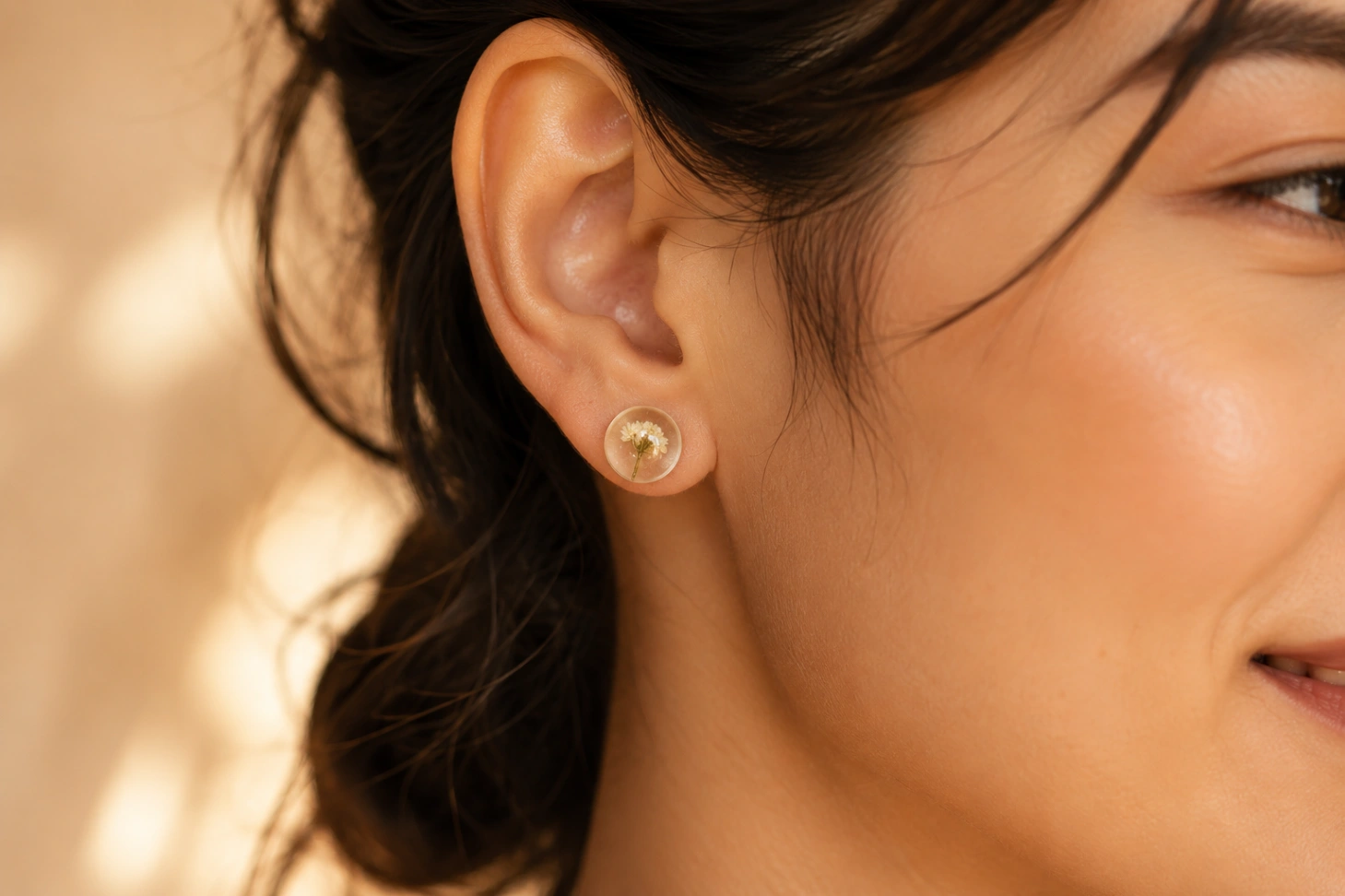
Key Takeaway: Resin earrings are generally safe for sensitive ears because fully cured resin is inert and non-reactive. When irritation does happen, it's usually caused by the metal findings (hooks, posts, and backs) — not the resin itself. Choosing earrings with nickel-free, gold-plated or surgical-steel findings is the single most effective way to wear them comfortably.
If you've ever taken off a pair of earrings to find your earlobes red, itchy, or sore, you already know why "are resin earrings safe?" is the first question sensitive-eared buyers ask us. The short answer: yes, for most people, resin earrings are a safe and comfortable choice — provided the metal parts that touch your skin are the right kind. Cured resin is one of the most skin-friendly materials in jewelry, but the tiny hook or post behind it can make or break your experience. In this guide, we'll explain exactly what causes earring reactions, why resin itself rarely is the culprit, and how to choose and wear botanical resin earrings so your ears stay happy.
What Actually Causes Earring Allergies?
Most "earring allergies" are not allergies to the design or the shape — they're a reaction to specific metals. The biggest offenders are:
- Nickel — by far the most common cause of contact dermatitis from jewelry. Many inexpensive earring posts and hooks contain it.
- Cobalt — often found alongside nickel in low-cost alloys, and a frequent secondary trigger.
- Cheap mixed metals — unmarked "fashion" alloys that can leach various metals as they tarnish, especially when they meet sweat.
The reaction usually shows up as redness, itching, a small rash, or a weepy, sore feeling around the piercing after a few hours of wear. It's your skin reacting to the metal — which is exactly why the material of the decorative part matters so much less than the material of the finding.
Are Resin Earrings Safe? Why Cured Resin Is Inert
Here's the reassuring part. Once resin has fully cured, it becomes a hard, stable, non-porous solid. In that state it is chemically inert — it doesn't leach, it doesn't react with sweat the way some metals do, and it doesn't shed irritants onto your skin. That's why so many people with sensitive ears find resin far gentler than the costume jewelry that used to bother them.
This is also what people mean when they call resin earrings "hypoallergenic." It's worth being precise: hypoallergenic means less likely to cause a reaction — not a guarantee that no one ever will. The overwhelming majority of wearers have no issue with properly cured resin. A small minority of people are sensitive to resins, so we'd never claim it's impossible — but it's uncommon, and it's not the usual source of trouble.
At our Chandigarh studio, every piece is fully cured before it ever reaches you, and we use real dried and pressed flowers sealed inside UV-resistant resin that won't yellow for 20+ years. You can see the range on our resin earrings page.
The Real Culprit: Metal Findings
If the resin is rarely the problem, what is? The findings — the small metal components that actually touch your skin:
- Posts and hooks that pass through or sit against the piercing
- Ear wires on dangle styles
- Backs and butterfly clutches that rest behind the lobe
A beautifully made resin pendant attached to a cheap nickel hook will still irritate sensitive ears — because the part doing the irritating is the hook, not the resin. This is the detail budget brands quietly skip, and it's the first thing you should check before buying any pair, resin or otherwise.
| Component | Reaction Risk for Sensitive Ears | Why |
|---|---|---|
| Fully cured resin body | Low | Inert, non-porous, doesn't leach |
| Nickel / cheap-alloy findings | High | Common contact-allergy trigger |
| Nickel-free, gold-plated or surgical-steel findings | Low | Designed to minimise skin reactions |
How We Make Our Resin Earrings Safe for Sensitive Ears
Because the findings matter most, that's where we focus. Our botanical resin earrings use nickel-free findings — gold-plated or surgical stainless steel — chosen specifically to reduce the risk of irritation for sensitive skin. Surgical steel and quality gold plating are the same families of metal trusted for fresh piercings, which tells you a lot about how gentle they're meant to be.
Add to that the fact that each piece is handcrafted and one-of-a-kind — real flowers, fully cured, no two pairs alike — and you get jewelry that's as kind to your ears as it is easy to wear daily. Browse the full shop to see what's available, or start with our resin earrings collection.
Tips for Wearing Resin Earrings with Sensitive Ears
Even with the right findings, a few simple habits make a real difference:
- Clean before first wear. Wipe the posts or hooks with a little rubbing alcohol and let them dry. This removes any manufacturing residue.
- Start short. For the first wear, keep them on for just a few hours rather than all day, and see how your ears feel.
- Keep your piercings clean and dry. Sweat and trapped moisture make any skin more reactive.
- Take them off at night. Giving your ears a daily break reduces cumulative irritation.
- Don't share earrings. It keeps bacteria away from sensitive piercings.
What to Do If You Have a Reaction
If your ears become red or itchy, remove the earrings and let the skin recover. In most cases, the trigger is the metal finding rather than the resin — so switching to a verified nickel-free, gold-plated, or surgical-steel pair often solves it entirely. Keep the area clean and dry while it settles.
Medical disclaimer: This article is for general information only and is not medical advice. If irritation persists, spreads, or you're unsure what's causing a reaction, please consult a doctor or dermatologist — they can identify the specific trigger and recommend the right care for you.
Resin Earring Safety FAQs
Are resin earrings safe for sensitive ears?
For most people, yes. Fully cured resin is inert and rarely the cause of irritation. The key is choosing earrings with nickel-free, gold-plated or surgical-steel findings, since the metal parts are the usual source of reactions.
Are resin earrings hypoallergenic?
Cured resin is considered hypoallergenic, meaning it's less likely to cause a reaction — not that a reaction is impossible. The earring's findings matter just as much, so look for nickel-free metals.
Can I be allergic to the resin itself?
It's uncommon but possible. A small number of people are sensitive to resins. If you've reacted to several pairs even after switching to nickel-free findings, speak to a dermatologist to pinpoint the cause.
Why do my ears react to some earrings and not others?
Usually it comes down to the metal in the findings. Nickel and cheap alloys trigger reactions; nickel-free, gold-plated, or surgical-steel findings are far gentler.
How should I care for my resin earrings?
Wipe them clean, keep them dry, avoid harsh chemicals and prolonged water exposure, and store them away from direct heat. Our UV-resistant resin won't yellow for 20+ years with normal care.
Final Thoughts: Wearing Resin Earrings with Confidence
So, are resin earrings safe for sensitive ears? For the vast majority of people, yes — because the resin itself is inert and gentle, and the only real variable is the metal that touches your skin. Choose nickel-free, gold-plated or surgical-steel findings, follow a few simple wearing habits, and you can enjoy beautiful botanical earrings without the redness and itch you may have come to expect from cheaper jewelry.
Ready to find a pair your ears will love? Shop our hypoallergenic botanical resin earrings — handcrafted in Chandigarh, starting from just Rs.100, with free shipping on orders above Rs.999. Explore the resin earrings collection, browse the full shop, or message us on WhatsApp at +91-9310565862 with any questions. You can also reach us anytime through our contact page or at support@sabhyakala.com.
Sabhya Kala — real flowers preserved in UV-resistant resin, handcrafted in Chandigarh and made to be worn comfortably, every day.